The Role of C45 Carbon Steel in the Railway Industry
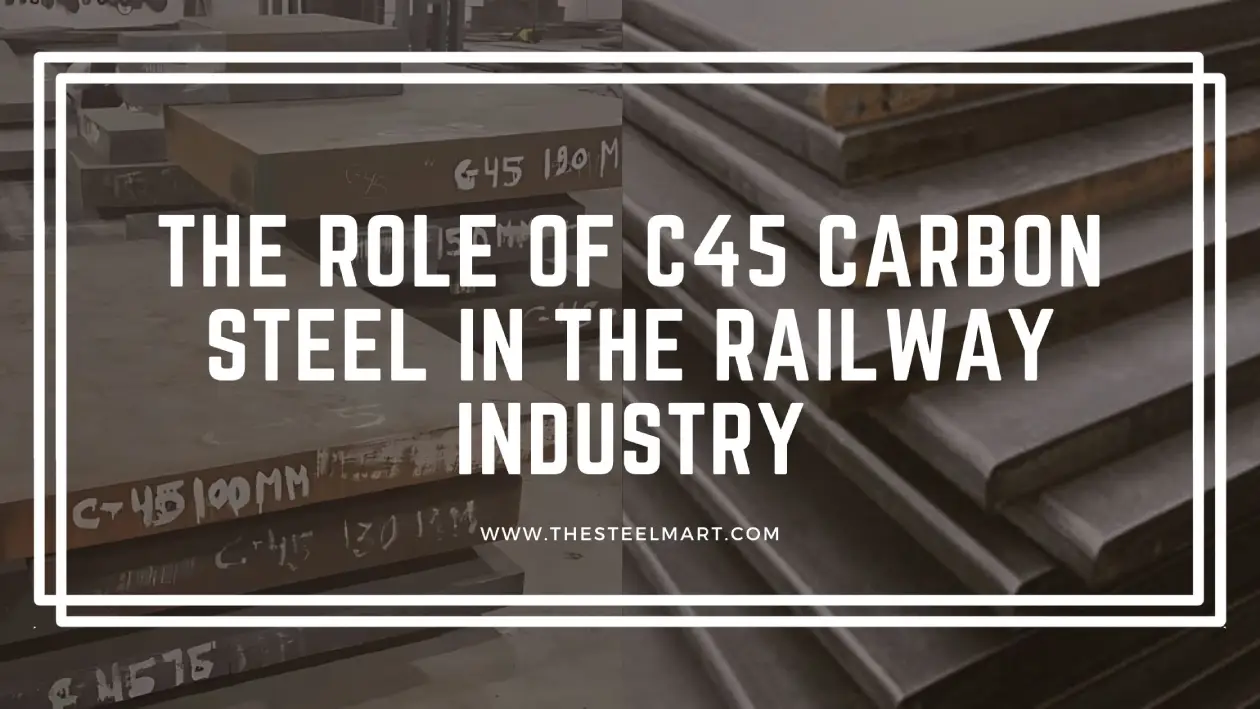
The Role of C45 Carbon Steel in the Railway Industry
The railway industry is recognised as the most intricate and exacting engineering field worldwide. There are different kinds of railway systems available, such as the high-speed bullet train and heavy freight locomotives, and they all need materials with high strength, the ability to endure vibration, continuous friction, and exposure to outdoor environments. Among them is a material called C45 carbon steel that has been the embodiment of faithfulness and power throughout the years.
C45 carbon steel, or AISI 1045 or EN 1.0503, is a medium-carbon steel characterised by its remarkable mechanical properties. It is the combination of tensile strength, toughness, wear resistance, and machinability that makes this steel the most preferred one in the manufacturing of railway components with high impact. Being one of the C45 carbon steel suppliers, Steel Mart has been a constant source of good-quality carbon steel for the railway engineering companies, OEMs, and maintenance firms across the country.
In this blog, the focus is on the railway industry and how the use of C45 carbon steel is extended to the different parts of the railway sector, its benefits, and the ongoing reasons for C45 being among the most trustworthy engineering materials.
Grasping the Significance of Material Selection in Railroads
Railway networks are subject to very high mechanical pressure. The weights of the trains can reach thousands of tons, their journeys may be very long, and they will always be subjected to dynamic forces. Every part, even the smallest one, must work without a hitch because if a material fails even slightly, it can cause big breakdowns or even unsafe situations.
In this context, material selection becomes very important. The carbon steel C45 is a primary material because of the following reasons:
- A combination of strength and toughness
- A very long life of service
- Possessing a superb quality of resistance to mechanical wear
- The production cost savings of large-scale production
Consequently, it can be used in many different railway applications.
Why C45 Carbon Steel Is Perfect for Railway Engineering
1. High Tensile Strength for Heavy Loads
Railway components experience extreme load-bearing conditions.
C45 steel offers a tensile strength of:
- 600 – 800 MPa (after heat treatment)
- 410 – 550 MPa (as rolled)
This high strength ensures that components like axles, gears, and couplings can sustain heavy weights without deformation.
2. Excellent Wear and Abrasion Resistance
Railway parts such as brake mechanisms, bearings, and coupling joints undergo constant friction. C45 steel’s medium carbon content gives it the hardness needed to withstand:
- Abrasion
- Repetitive motion stress
- High frictional heat
This leads to fewer part replacements and improved reliability.
3. Good Machinability for Precision Components
Railway parts demand high accuracy. Manufacturers require metals that can be easily:
- Machined
- Drilled
- Milled
- Turned
C45 carbon steel supports precision engineering with excellent machinability in the normalized or annealed condition.
4. Excellent Heat-Treating Capability
C45 steel is well-known for its ability to respond to heat treatments, allowing customization of properties based on railway needs.
It can be:
- Hardened
- Tempered
- Normalized
- Induction hardened
This allows manufacturers to produce parts with customized hardness, strength, and resilience.
5. Cost-Effective for Mass Production
Railway networks require large quantities of components.
C45 steel provides a balance of performance and affordability, making it practical for:
- Locomotive production
- Track infrastructure
- Maintenance and repair operations
Its availability and predictable performance make it a reliable industrial choice.
Major Applications of C45 Carbon Steel in the Railway Industry
1. Railway Axles and Shafts
Axles must bear the full weight of the train while enduring rotational forces and vibrations.
C45 steel’s strength and fatigue resistance make it suitable for:
- Main axles
- Crank shafts
- Gear shafts
- Stub axles
Its ability to resist cracking ensures safe and long-lasting performance.
2. Gears and Transmission Components
Railway gear systems require materials that handle torque and impact loads.
C45 steel is commonly used for:
- Pinion gears
- Spur gears
- Worm gears
- Gear rims
Heat-treated C45 gear components provide long, reliable service life.
3. Coupling and Connecting Rods
These components must tolerate high tension and compression cycles.
C45 steel ensures strong mechanical performance, preventing failures during:
- Train coupling
- Direction changes
- Heavy braking
Its toughness is essential for shock absorption.
4. Brake System Components
Reliable braking is crucial for railway safety.
C45 carbon steel is used for:
- Brake levers
- Brake discs
- Brake pads support structures
- Connecting elements
Its resistance to wear and heat helps maintain braking efficiency.
5. Track Fasteners and Clips
Rail tracks require secure fastening systems to maintain alignment. C45 steel is used for:
- Rail clips
- Fishplates
- Bolts and nuts
- Track clamps
These components must endure vibration and stress — C45 steel handles these conditions effectively.
6. Bearing and Housing Parts
Bearings in rail systems must withstand loads and maintain smooth operation.
C45 steel enables:
- Precision bearing housings
- Sleeves
- Bearing rings
- Support structures
Its dimensional stability ensures accurate fit and long lifespan.
Benefits of Using C45 Carbon Steel in Railway Manufacturing
Railway engineers prefer C45 steel for several reasons:
Longer Component Life
C45 carbon steel’s durability reduces the frequency of part replacements.
Improved Safety
High-strength components lower the risk of failure, contributing to safer operations.
Greater Reliability
Enhanced wear resistance ensures consistent performance over long periods.
Reduced Maintenance Costs
Less wear and tear means lower maintenance and operational expenses.
Versatility in Manufacturing
C45 steel adapts easily to machining, forging, and heat treatment.
Availability and Standardization
It meets international specifications, making procurement simple for global railway networks.
Steel Mart – Reliable Supplier of C45 Carbon Steel for Railways
Steel Mart provides graded C45 carbon steel for Indian and international railway projects.
We offer:
- Certified, high-quality C45 material
- Multiple forms: rounds, flats, sheets, bars
- Customized cutting and finishing
- On-time delivery
- Industry-standard chemical and mechanical testing
Railway manufacturers trust Steel Mart for consistent, dependable carbon steel.
Conclusion
C45 carbon steel remains an essential material in the railway industry due to its strength, toughness, wear resistance, and adaptability. It supports the production of critical components like axles, gears, couplings, and brake systems — all of which are vital for safe and efficient rail operations.
With its proven performance and cost-effectiveness, C45 steel continues to be the backbone of railway engineering.
If you are looking for a reputable C45 carbon steel supplier, Steel Mart offers the reliability, quality, and expertise that the railway industry depends on.
+91 8076217931